

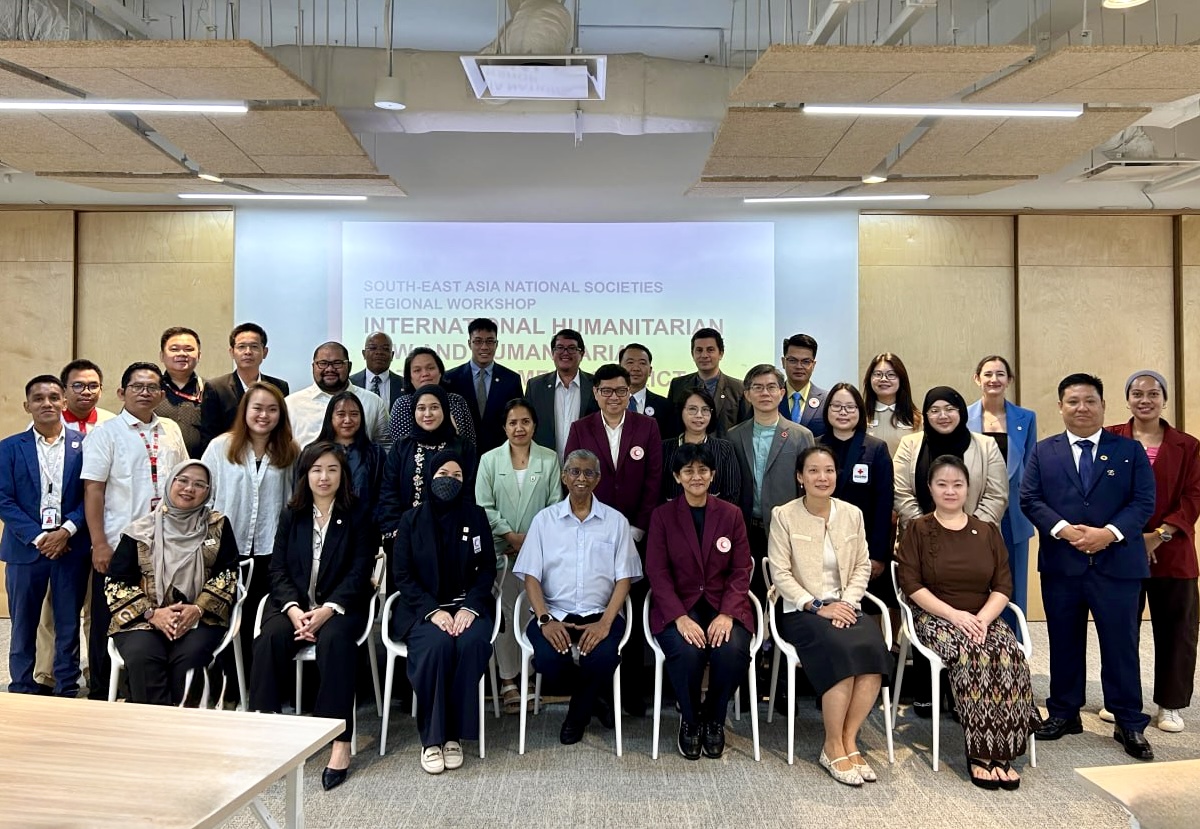
International humanitarian law (IHL) sets out internationally recognised laws that aim to protect lives and dignity in situations of armed conflict. Its impact depends on how well these laws are understood and respected. Strengthening awareness and respect for IHL is a shared effort involving governments, institutions and humanitarian organisations.
National Societies play a key role in promoting and disseminating IHL, working collaboratively with governments and partners.
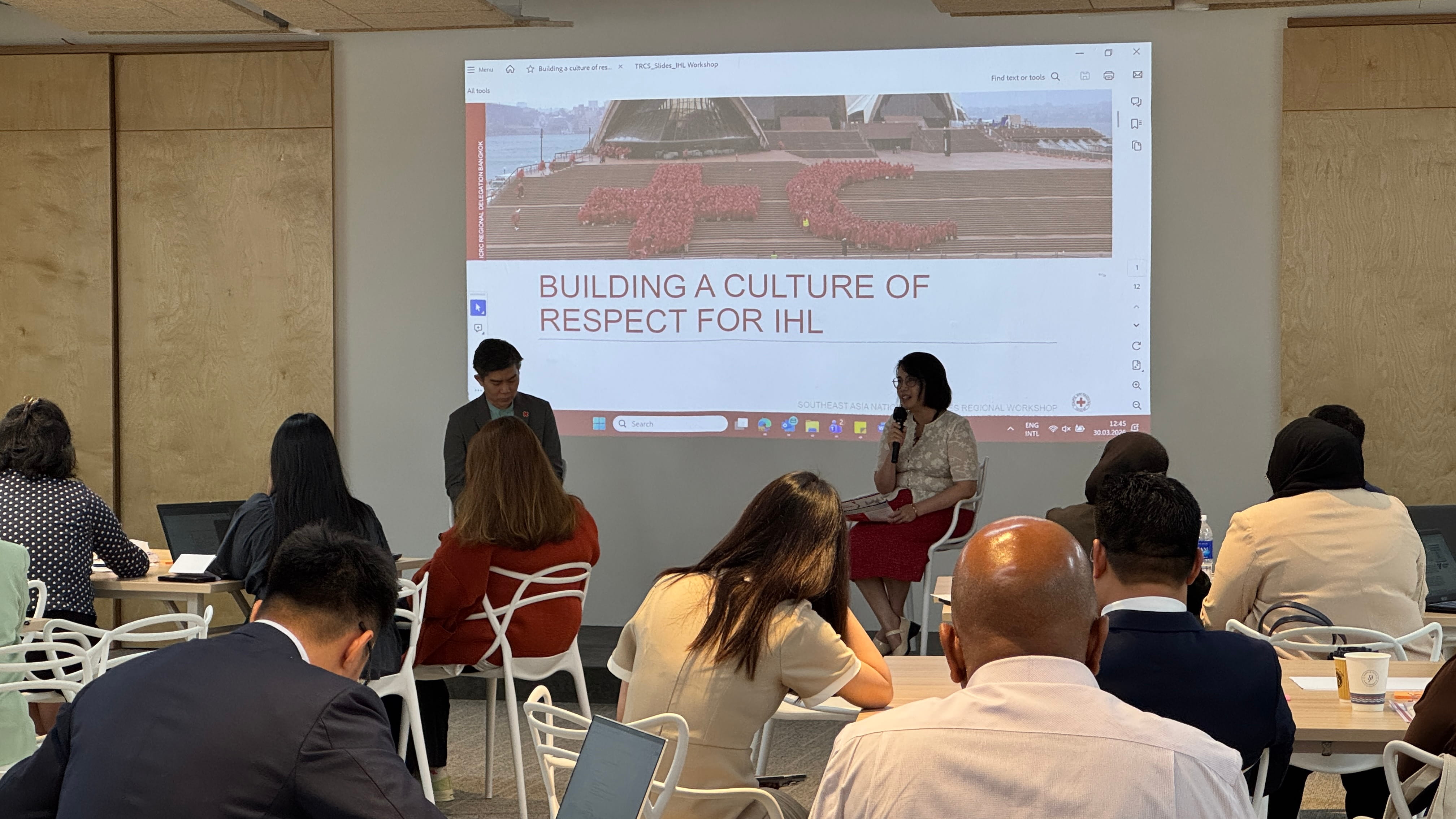 Presentations and discussions focused on how IHL can be better understood, communicated and applied in practice.
Why this matters
IHL applies in situations of armed conflict, including both international and non-international conflicts. While it does not stop conflict, it safeguards lives and dignity, and guides humanitarian action.
Respect for these laws helps protect people affected by conflict and contribute to conditions that support greater stability.
For the Singapore Red Cross, this underpins how we support affected communities as we respond to evolving needs and work alongside trusted partners across the Red Cross Red Crescent Movement.
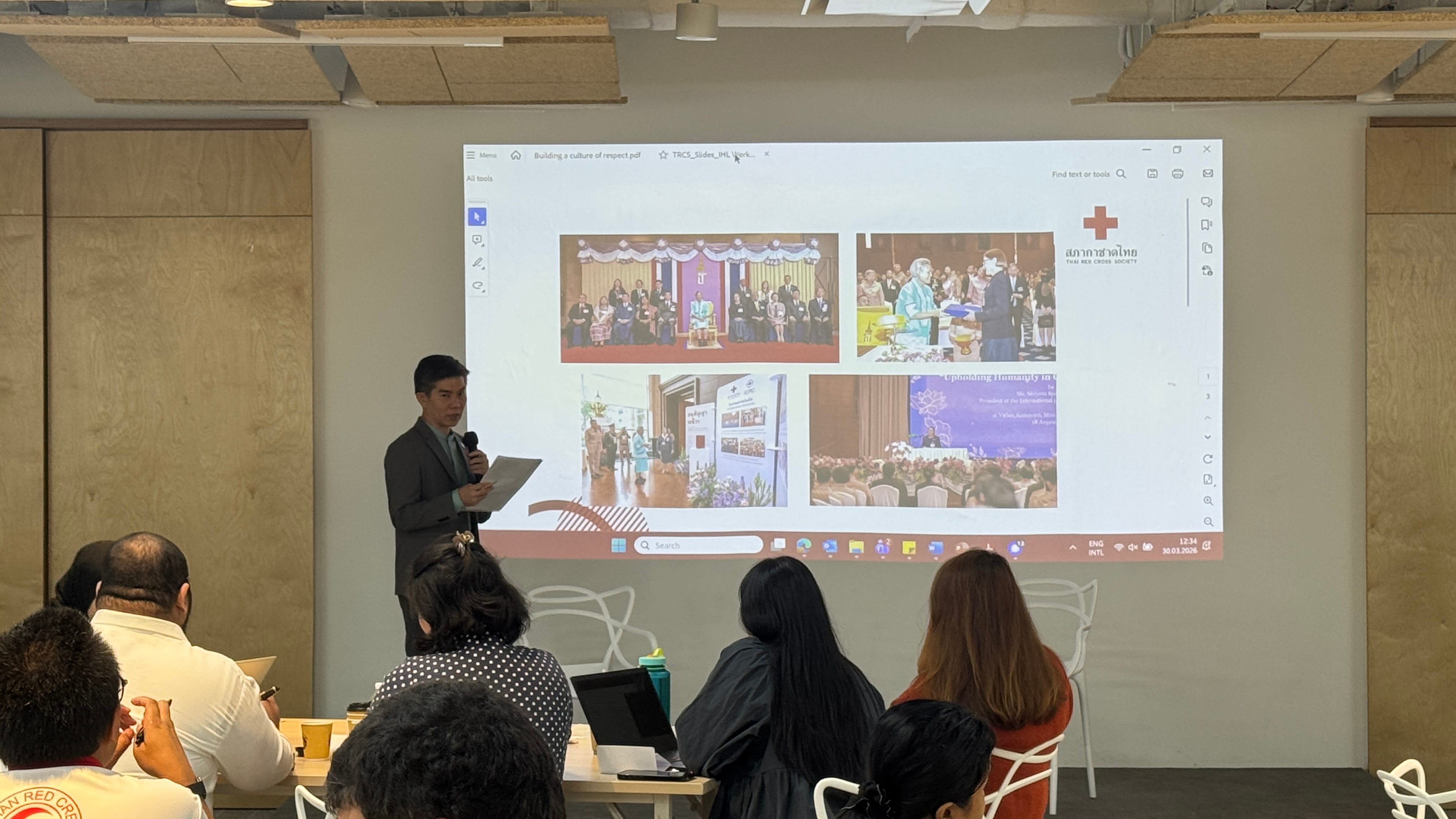 Through dialogue and exchange, participants explored how IHL can be made more accessible and relevant.
From dialogue to practice
Over two days, representatives from across Southeast Asia gathered in Singapore for a regional workshop on IHL to exchange perspectives on how international humanitarian law is understood, communicated and applied in different contexts.
Hosted by the Singapore Red Cross (SRC) and co-organised with the International Committee of the Red Cross (ICRC), the workshop focused on strengthening awareness of IHL and exploring practical ways to make it more accessible - from engaging youth to using simple and relatable approaches.
What this means for Singapore
While Singapore is not affected by armed conflict, the principles underpinning IHL remain relevant, reflecting the importance of respecting others and protecting human dignity, especially in situations of vulnerability. These are values that extend beyond conflict and shape how we understand humanitarian action in our everyday lives.
For a small state like Singapore, respect for rules and international law also plays an important role in keeping us safe and contributing to a stable and predictable global environment.
For the Singapore Red Cross, this includes contributing to public awareness, education and dialogue, and fostering a deeper understanding of how these principles guide both global humanitarian efforts and local community action.
As part of the global Red Cross Red Crescent Movement, the Singapore Red Cross remains committed to working with partners to support communities affected by crises, while strengthening awareness and understanding of humanitarian principles both globally and at home.